
As construction markets continue to demand faster, more efficient, and more sustainable building solutions, AAC (Autoclaved Aerated Concrete) blocks are gaining strong attention worldwide. For many investors and traditional block manufacturers, however, large-capacity AAC plants can feel like a significant leap in terms of capital, complexity, and operational risk.
This is where the mini scale AAC block plant becomes an attractive and practical solution. Designed for manageable investment and stable output, mini AAC plants allow manufacturers to enter the lightweight block market with greater control and flexibility.
What Is a Mini Scale AAC Block Plant?
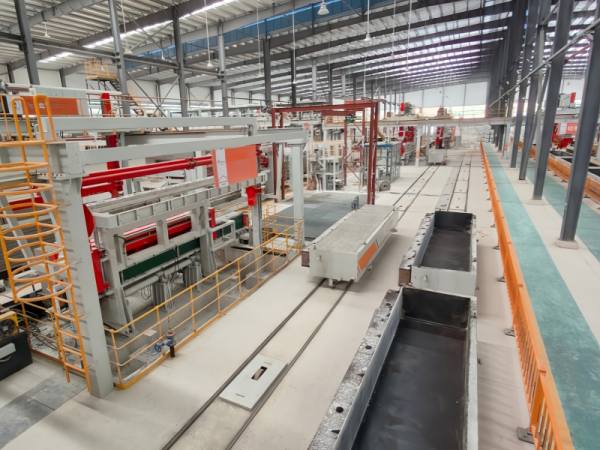
A mini scale AAC block plant is a compact AAC production line with relatively lower annual output compared to large industrial plants. Typical capacities range from 10,000 to 30,000 cubic meters per year, making them ideal for regional supply and first-stage investment.
Despite the smaller scale, the production principle remains the same as larger AAC plants. Blocks are produced through batching, mixing, casting, cutting, and autoclave curing, ensuring consistent quality and performance.
Why Mini AAC Block Plants Are Becoming Popular
Lower Investment Threshold
One of the main advantages of a mini AAC block plant is the reduced capital requirement. Equipment scale, factory size, and utility demand are all more manageable, making it easier for small and medium-sized enterprises to enter AAC manufacturing.
Easier Operation and Management
Mini plants require fewer operators and simpler daily coordination. This is especially important for investors transitioning from traditional block production or those new to AAC technology.
Faster Project Implementation
With a compact layout and fewer systems to integrate, mini AAC plants typically have shorter installation and commissioning timelines, allowing production to start sooner.
Better Match for Local Markets
In many regions, demand is best served by regional suppliers rather than large centralized factories. Mini plants help avoid overproduction while maintaining stable supply to nearby construction projects.
Typical Capacity of a Mini Scale AAC Block Plant
A 20,000 m³/year AAC block plant is often considered a classic mini-scale configuration. It offers a balanced combination of output, investment control, and operational stability.
This capacity is well suited for:
Regional housing projects
Commercial and mixed-use developments
Partition wall supply
Gradual market expansion strategies
Many manufacturers start at this scale and plan future upgrades once market demand is fully established.
Key Products from a Mini AAC Block Plant
Mini scale AAC plants are typically designed to produce standard AAC blocks used in modern construction, including:
Lightweight wall blocks for residential buildings
Internal partition blocks for offices and apartments
Infill wall blocks for frame structures
Blocks with thermal insulation properties for improved indoor comfort
Block sizes and densities can be adjusted based on local building practices and customer preferences.
Production Process in a Mini AAC Block Plant
Although compact in size, the production process follows proven AAC manufacturing principles:
Raw Material Preparation – Cement, lime, gypsum, and silica materials are prepared and conveyed
Batching and Mixing – Automatic or semi-automatic systems ensure accurate proportions
Casting – Slurry is poured into molds
Pre-Curing – Material gains sufficient strength for cutting
Cutting – Blocks are cut to precise dimensions
Autoclave Curing – Steam curing develops strength and durability
Finished Product Handling – Blocks are stacked and prepared for delivery
This process ensures consistent block quality even at smaller production scales.
Space and Layout Advantages
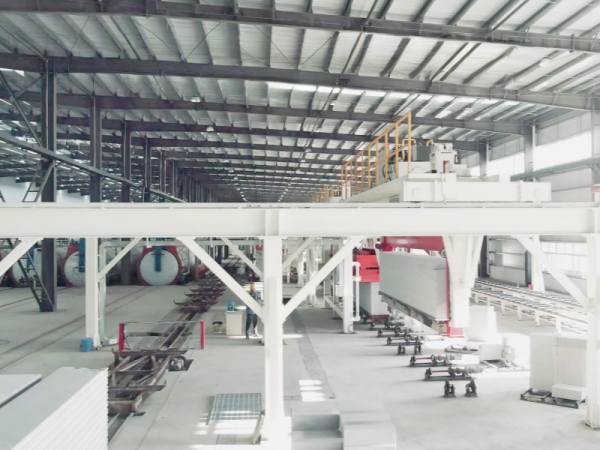
Mini AAC block plants require less land and simpler factory layouts compared with large-scale facilities. This makes them suitable for:
Existing industrial plots
Upgraded traditional block factories
Areas with limited available land
Efficient layout planning also improves internal logistics and daily workflow.
Operating Costs and Efficiency
Operating a mini AAC plant allows manufacturers to maintain closer control over:
Labor requirements
Energy consumption
Raw material usage
Maintenance scheduling
Because production output matches realistic demand levels, inventory pressure and cash flow risks are often reduced.
Who Should Consider a Mini Scale AAC Block Plant?
A mini AAC block plant is particularly suitable for:
Traditional block manufacturers upgrading product lines
New investors entering the building materials sector
Regional suppliers serving local construction markets
Companies testing AAC block demand before large-scale expansion
It offers a controlled pathway into AAC manufacturing with long-term growth potential.
Future Expansion Potential
One of the key strengths of a mini scale AAC block plant is scalability. Many systems are designed so that:
Additional molds can be added
Automation levels can be increased
Capacity can be expanded step-by-step
This allows manufacturers to grow in line with market demand rather than committing to oversized facilities from the beginning.